Article
What Church Planters Must Remember About People’s Greatest Need
If you are not careful, the constant presence of visible needs can slowly begin to reshape your ministry.
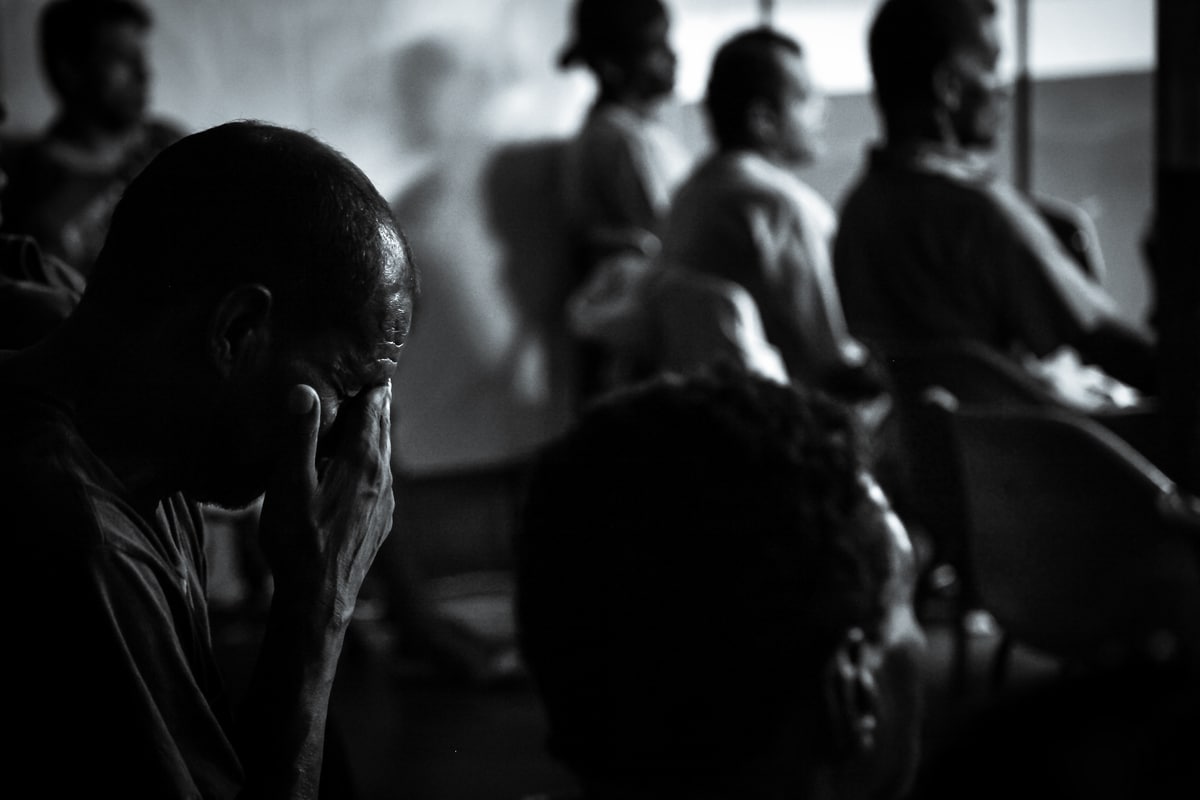
Church planters live in the middle of need.
You feel it from the earliest days. There are practical needs, financial needs, relational needs, leadership needs, facility needs, community needs, marriage needs, parenting needs, counseling needs, and on and on. Some days it feels like everyone is carrying something heavy and looking to you for help. Other days, you are the one carrying something heavy, wondering who will help you.
That is part of the work. Church planting puts you close to brokenness. But if you are not careful, the constant presence of visible needs can slowly begin to reshape your ministry. You can drift into thinking the most urgent need is always the greatest need. You can start building your ministry around what is loudest, most obvious, and most immediate.
That is one of the reasons I love Mark 2:1–12.
This passage is familiar. Jesus is in Capernaum. The house is packed. Four men carry their paralyzed friend to Him. They cannot get through the crowd, so they climb the roof, dig through it, and lower the man down in front of Jesus. It is one of the most memorable scenes in the Gospels.
But this story is doing more than showing us a dramatic miracle. It is showing us the heart of Jesus’ mission and the kind of people church planters must be if we are going to serve that mission faithfully.
People Need the Word
Mark tells us that when Jesus returned to Capernaum, the crowds gathered again, so tightly that there was no room left, not even at the door. And what was Jesus doing?
“He was preaching the word to them” (Mark 2:2).
That detail matters.
People came with all kinds of needs. Some came curious. Some came desperate. Some came hoping for healing. Some came because of the growing stories and rumors. But Jesus, over and over again, kept giving them the Word.
That should arrest us!
Jesus knows what people need more deeply than we do. He is not indifferent to suffering. He is not detached from brokenness. He is not unaware of the pain in the room. But He knows their greatest need, and so He gives them what they most need.
He gives them the Word.
Church planter, do not overlook the kindness of God in that. The Word is not a consolation prize. It is not a temporary substitute. It is not Jesus saying, “This will have to do for now.” He gives His Word because His Word reveals Him. His Word exposes the heart. His Word points sinners to the gospel. His Word anchors saints in truth. His Word reminds us that everything we need for life, hope, forgiveness, purpose, and salvation is found in Him.
This is why we must never build our churches around gimmicks, personalities, or the felt needs of the moment. We need the Word of God. Our people need the Word of God. Our cities need the Word of God.
Read it. Preach it. Teach it. Pray it. Sing it. Memorize it. Build your church around it. In a church planting culture that often rewards novelty and speed, Mark 2 reminds us that Jesus kept doing the same faithful thing: He preached the Word.
People Need Faith and Friends
Then Mark introduces four men carrying a paralyzed friend. We are not told much about the man. We are not given his backstory. We do not know if his paralysis came from an accident, a disease, or a condition from birth. We only know this: he could not get to Jesus on his own.
That alone preaches.
Every church planter knows people like this. Not necessarily physically paralyzed, but spiritually helpless. Unable to save themselves. Unable to fix what is deepest in them. Unable to get to Jesus by their own effort.
And then there are the four friends.
They arrive at the house and realize the crowd has made the normal path impossible. They cannot get through the door. At that point, most people would have gone home. “We tried.” “Maybe next time.” “The room was too full.” “There was no opening.”
But not these men.
They climb the roof. They dig through it. They lower their friend in front of Jesus.
What a picture of faith!
Their faith was persistent. The obstacle did not stop them. Their faith was creative. When the normal path was blocked, they found another way. Their faith was sacrificial. Carrying a grown man, climbing a roof, tearing it open, and likely paying for repairs was not convenient. Faith rarely is.
Church planters need that kind of faith, too.
We say we believe Jesus is the only hope for our neighbors, our cities, our friends, and the nations. But real faith moves. Real faith acts. Real faith refuses to be paralyzed by obstacles. Real faith keeps finding ways to get people to Jesus.
There are moments in church planting when doors close, plans fall apart, attendance dips, leaders disappoint, and strategies fail. In those moments, it is tempting to grow passive, cynical, or overly polished. But the men in Mark 2 remind us that faith is not merely believing right things. Faith is believing them so deeply that your life begins to move in line with them.
People Need Forgiveness of Sins
Then comes the most shocking line in the passage.
“When Jesus saw their faith, he said to the paralytic, ‘Son, your sins are forgiven’” (Mark 2:5).
That is not what anyone expected Him to say.
The man is paralyzed. Everyone in the room assumes the obvious issue is the biggest issue. But Jesus sees more deeply than the crowd. He sees more deeply than the friends. He even sees more deeply than the man on the mat.
He addresses the deeper need first.
This is where church planters must pay careful attention. People really do have broken bodies, broken stories, broken relationships, broken systems, and broken communities. We should care about those things. Jesus does. We must never use the priority of the gospel as an excuse for coldness or inaction.
But we must also remember that no matter how visible the pain is, the deepest human problem is not circumstantial. It is spiritual.
The paralyzed man needed to walk. But even more than that, he needed to be forgiven. That does not minimize suffering. It puts suffering in the right order.
A healed body that is not reconciled to God is still headed for judgment. A restored life without forgiven sin is still eternally lost. Jesus knew that, and so He spoke to the deepest need first.
Church planters must remember this. We should feed the hungry, but not as if bread is the greatest miracle. We should care for marriages, but not as if relational peace is the highest good. We should seek justice, mercy, renewal, and practical good in the places we plant, but never forget that beneath every visible fracture is the deeper ruin of sin.
The gospel is not less than practical compassion. But it is always more.
The gospel is not, “Here is a sandwich.” The gospel reality is that the grace of God has so changed me that I am moved to feed the hungry and tell them about the Christ who can save their soul.
The gospel is not, “Here is a well.” The gospel fruit is that God has cared for me in Christ, and so I care for you in a way that points beyond itself to the deeper living water only Jesus can give.
Word and deed belong together. But the deed is not the power. The gospel is the power. The deed is the sign that the gospel has taken hold of us.
Church planter, never lose sight of this. Jesus is not merely a helper for broken lives. He is not just a compassionate teacher or a miracle worker. He is the Son of Man with authority on earth to forgive sins. That is who we preach. That is who we offer to people. That is who our churches must be built upon.
If your ministry becomes centered on life improvement, moral uplift, or social usefulness, you may still draw a crowd. But you will eventually obscure the very glory this text is meant to reveal.
The great news of Christianity is not merely that Jesus can make life better. It is that Jesus can forgive sinners. That’s the great need of everyone we meet, serve, and evangelize. Give them Jesus. Show them Jesus.