Article
Two Things Planters Can’t Overlook
I learned that baptism and communion were not just fodder for theological debate—they are critical for the health of the church.

When I started the church planting journey, I had something of an awkward relationship with baptism and the Lord’s Supper. (I’ll use Lord’s Supper, communion, and the Supper interchangeably.) I knew they were important, but other things always felt more pressing. I felt pressure to baptize more people, and I knew we needed to figure out when to fit communion into our worship services.
Most of the books, talks, and trainings I encountered dealt with building teams, reaching people, developing leaders, and growing the church. I’m not necessarily complaining! These are crucial issues for church planters, and we need good resources to help us think through them. Things like baptism and communion—these were for seminary students. Church planters had more practical concerns. So I thought …
In a seminary classroom, however, I realized the ordinances were a treasure hidden in plain sight. I learned that baptism and communion were not just fodder for theological debate—they are critical for the health of the church. Few realities are both as theological and as practical as baptism and the Lord’s supper.
After years of thinking about Baptist identity and sacramentology in both seminary classrooms and the trenches of local church ministry, I want to help pastors and church planters embrace the ordinances as gifts of God for the people of God. I want to share three ways that baptism and communion shape a local church: they mark God’s people, they cultivate community, and they anchor us in the gospel.
They mark God’s people.
We are a new covenant people. Baptists don’t just believe that believer’s baptism is the New Testament pattern (though we do). More fundamentally, we believe that the church is to be comprised of believers. Thus, we administer the covenant sign (baptism) to those who enter the covenant by faith (as we see in the New Testament pattern). Baptists agree with much of the Christian tradition—baptism is an entry into the church! We simply believe that entry happens when we repent and believe the gospel, not when we are born.
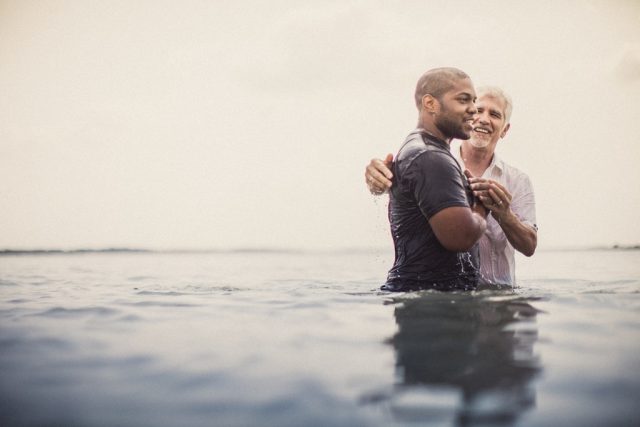
Baptism, then, is a declaration of one’s faith and a sign of one’s entry into the church. Baptists disagree, of course, on many matters related to baptism. (Yes, this is ironic.) Some baptize young children, others do not. Some baptize spontaneously, others do not. Some baptize only those seeking membership, others do not. While I have no argument to put forth on any of these important topics, I simply want you to think about baptism as a gate of entry into the church, both visible and invisible. When you baptize a new believer, they are marked by God and his church as one who belongs to Christ.
Every time, then, a baptized Christian observes the Lord’s Supper, they confess that same faith they proclaimed at their baptism. With the cup and bread, the Christian says, “Christ is mine, and I am his!” Baptism and communion work together to mark the people of God, from the moment they enter the church to the day we gather around a heavenly table. Jesus designed his church in just such a way.
They create community.
The BFM 2000 refers to baptism and the Supper as “ordinances of the church.” This means we should be very careful observing them outside of the gathered body. Again, I want to avoid polemics and intramural debates. I just want to make a seemingly obvious point: we observe these things together, as the gathered people of God.
Baptism and communion work with the Word of God to cultivate gospel-centered, Christ-exalting community.
Every baptism reminds the whole church that we are gospel people. We may be very different people from very different places with very different lives. But every single one of us passed through those same waters. This shared act reminds us of our shared faith and shared journey. Every baptism blesses the church in ten thousand ways.
Not only did we pass through those same waters, but we also continually gather around the same table.
Every week, I see our congregants rise from their seats and come forward to receive the bread and the cup. I learn to love them as I see them as my brothers and sisters, invited by our Father to the Table prepared by our big Brother. As we gather around this table and under God’s Word, every single week, we are being formed by God into a gospel people. In simple, unspectacular ways, over the course of a lifetime, God is making us more like him.
Church planter, communion isn’t something you must fit into your liturgy—it lies at the very heart of Christian worship. Around his table, Christ builds his family.
They anchor us in the gospel.
In baptism, the Christian is buried with Christ in death and raised to walk in newness of life. The physical movements themselves demonstrate our faith in a crucified and risen Lord. In communion, the Christian remembers the gospel, reflects on the gospel, and proclaims the gospel (1 Corinthians 11).
How can we be more gospel-centered? What are practical ways to cultivate community and spur our people on to gospel mission? I think one way is hidden in plain sight. Receive the gifts of God for the people of God. Give the ordinances their proper place in the life of your church, pastor, and see what God might do.