Article
The Quiet Theology of Your Calendar
What your calendar says about your worship, work, and overall health.

I wake up every morning and generally have no idea what I’m doing on any given day. I’m not referring to my general cluelessness about life (although that does exist more often than I’d like to admit). I’m referring to the busyness that seems to captivate many of my days. And, particularly in ministry, it creeps up in two ways. The first is just an increase of work, study, tasks, meetings, counseling, and discipleship that comes with a growing church. The second is all the things that pop up any given day that aren’t on my calendar—the unexpected ministry needs.
Church planting has a way of exponentially increasing busyness. But it has to stop somewhere because God has designed us with good limitations. We would do well to be aware of those limitations and plan our work accordingly. I’ve learned that there’s a quiet sort of theology that’s reflected in my calendar. My calendar demonstrates whether I worship my Creator or worship what I’ve created.
Sabbath
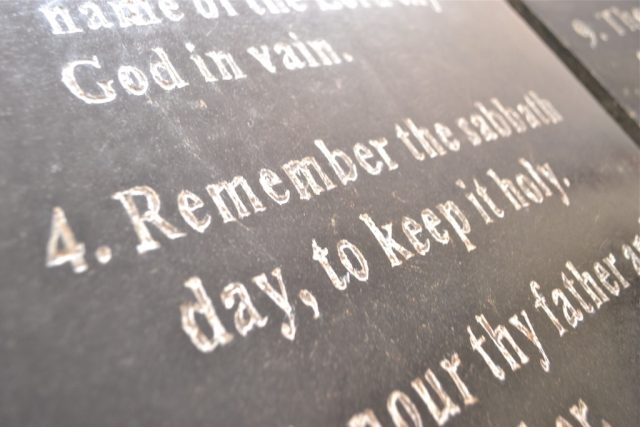
It’s not my intention to write an academic defense of the sabbath in this article. Theological opinions vary on the new covenant observation of the sabbath, but we can’t argue with the creation account. In the very beginning, God created for six days and then gave an example of sabbath (Genesis 2:3). He makes the sabbath holy. The law commanded the seventh day to be a strict day away from the activity of work. Many now observe this on the first day of the week (Sunday) in the new covenant.
I can’t speak for all pastors, but I would imagine that most of us don’t feel very rested when we finally lie down to sleep on Sunday night. In light of that, I always encourage church planters to observe a sabbath religiously. Now, I don’t use the term “religiously” to emphasize the fact that you shouldn’t skip a week of sabbath—I use that term because the sabbath is a religious exercise commanded to us by God. For our good, God has reminded us that we cannot and should not work every day. Make sure your calendar reflects this.
Prayer
Another often overlooked block of time in our lives is prayer. We’re quick to tell ourselves that prayer comes naturally and we will pray without ceasing (1 Thessalonians 5:17), but Scripture also calls us to times of quiet retreat into solitude to pray in worship and for our needs. We see all throughout the Gospels how Jesus retreated quite often for extended times of prayer. Daniel rigidly stuck to a schedule of prayer three times every day (Daniel 6:10). Countless other examples in Scripture show us that men of God are powered by communion with God.
Modern technology tempts us to neglect this even more. We’re more connected to one another than ever before, with communication devices constantly in our pockets that give us access to everyone we know. If Jesus had a cell phone, I don’t think He would’ve merely put it on “do not disturb” for an hour while He prayed; I think He might have left it at Peter’s house for days on end at times. It is right and good for us to disconnect with others so we can connect to God. Church planters especially will have to intentionally schedule time to do this.
Diligence
Sabbath and prayer can feel counterproductive to the principle of diligence. But as much as our calendars should reflect guarded times for rest and devotion, they should also reflect that we are hard workers. The best church planter in history, the Apostle Paul, unashamedly wrote, “I worked harder than any of them”—them being the other apostles (1 Corinthians 15:10). Paul made no apologies about working hard. Our diligent work in shepherding, preaching, comforting, and counseling is a labor that reaps an eternal harvest. That’s worth filling up your calendar for.
Paul tells us to “[make] the most of the time, because the days are evil” (Ephesians 5:16). If the days are filled with evil, every working day we have, we ought to intentionally fill that day with good. If you have a lighter day, don’t get distracted by social media or laziness—instead, prayerfully seek out who you can encourage in the church or what outsiders you could invite in. Read to develop your pastoral skills or plan ahead for that next sermon series. Resolve to never waste a work day because, as a shepherd in God’s church, you want to redeem the time.
Organization
A lack of organization is what makes a lot of church planters unproductive. They may understand the principles of balancing diligent work with rest and devotion, but a lack of organization can derail a good plan. Keeping a detailed calendar has changed my life for the better. The older I get, the more I realize keeping a calendar is just part of growing up. Teenagers fly by the seat of their pants, not knowing what the next week may bring. They depend on others to keep them on track. Responsible men make plans and keep plans. We can’t lead others into the plans God has for them if we can’t make sense of our own plans because we’re disorganized.
Thankfully, there are tons of apps that are helpful in the realm of schedule organization. Use a solid calendar app that will enable features that allow people to book meetings with you or integrate your task lists. Because we know the Lord values peace over chaos (1 Corinthians 14:33), His church is worthy of orderly and organized shepherds. Church planter, prioritize an organized and worshipful calendar.