Article
4 Leadership Lessons from Gethsemane
If Jesus does not intervene, what becomes of Peter?
Years ago, I saw a meme that showed a dog chasing a bird off a cliff, mouth open, ready to bite. The caption said, “Some decisions made in anger can’t be undone.”
That meme has stuck with me. Because it’s funny until it’s not.
It’s funny until you remember a conversation you wish you could take back. A meeting where your tone got away from you. A text you sent too quickly. A decision you made in frustration that affected people you love. It’s funny until you realize how many ministry scars were not caused by heresy, persecution, or moral failure, but by leaders who got angry and swung hard.
That is one of the reasons I keep coming back to Matthew 26.
Peter Messed Up. Big Time.
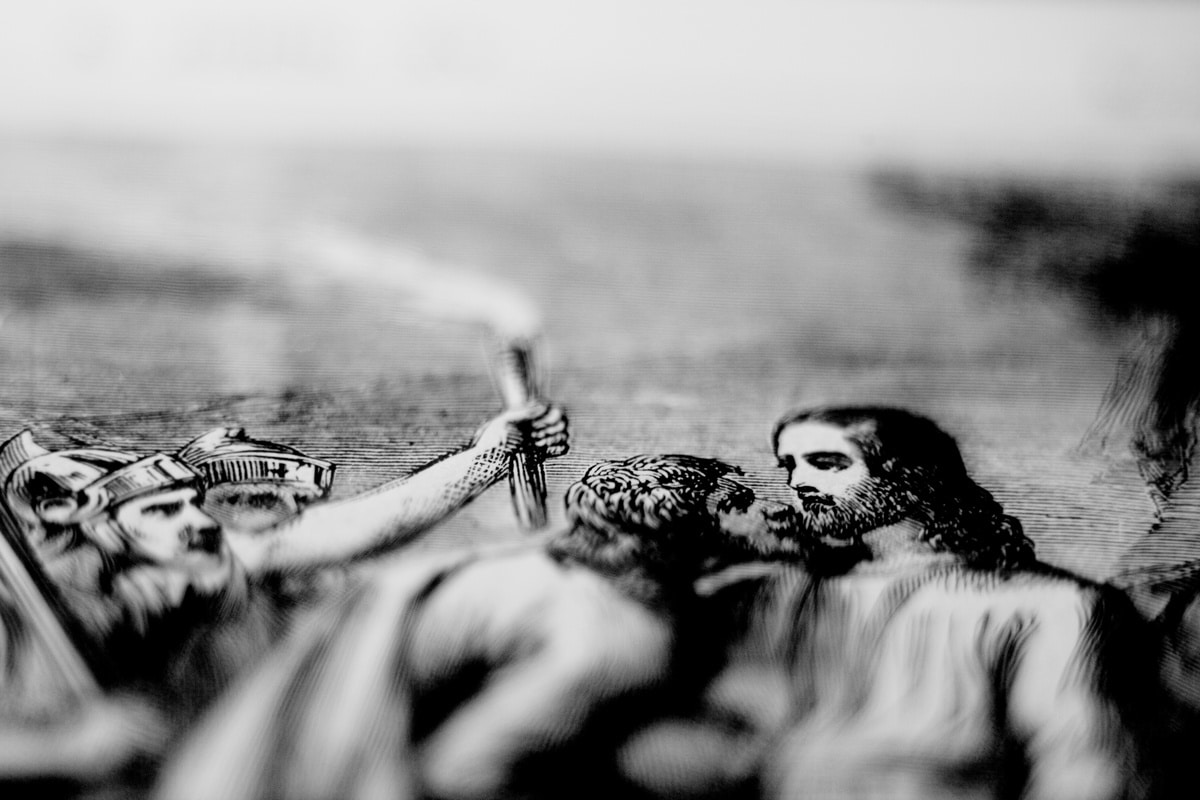
Jesus has been betrayed. The mob has arrived. The tension is thick. The moment is chaotic. And in the middle of it all, Peter draws a sword and strikes the servant of the high priest, cutting off his ear.
Let’s be honest about what happened.
Peter was not aiming for the ear.
He missed.
He was not trying to wound Malchus. He was trying to kill him. Peter was not going for precision; he was going for destruction. And in the heat of the moment, with adrenaline pumping and loyalty to Jesus burning hot in his chest, Peter took a violent swing. The only reason Malchus is not dead is because Peter’s rage was less accurate than his passion.
And then Jesus does something incredible.
He heals the man’s ear.
What a miracle!
But I am not sure the greatest miracle in that moment is what happened to Malchus. I think the greater miracle may be what did not happen to Peter.
Peter did not become a murderer that night.
Malchus did not die that night.
And the story of Peter did not veer off into a very different future.
Think about all that hangs in the balance in that moment. If Jesus does not intervene, what becomes of Peter? What happens to the broken disciple in the courtyard a little later that night? What happens to the restored apostle by the Sea of Galilee? What happens in Acts 2 when Peter boldly stands to preach Christ? What happens in Acts 10 and 11 when Peter carries the gospel across a line many thought should never be crossed? What happens in Acts 15 when he helps defend the truth of grace for the Gentiles? What happens to the letters he would one day write?
One angry swing could have erased so much.
THAT is the grace in Gethsemane.
It is not only the grace that forgives sin. It is the grace that restrains it.
It is not only the grace that restores us after we fall. It is the grace that keeps our worst moment from becoming our last useful moment.
And that matters for every pastor and planter reading this.
There are at least four truths we can pull from Matthew 26 and apply to our leadership:
1) Zeal Can Outrun the Way of Jesus
If you have led people for more than five minutes, you know what it feels like to stand in your own Gethsemane. You know what it feels like to be tired, disappointed, misunderstood, misrepresented, betrayed, cornered, and afraid. You know what it feels like to watch people come at Jesus, his truth, or his church, and feel the urge to grab a sword.
Not a literal sword, of course.
But a sharp tongue. A cutting email. A reactionary decision.
A defensive sermon comment. An impulsive leadership move.
A refusal to listen. A need to “win” the moment.
Sometimes pastors and planters baptize these reactions as conviction. We call it courage. We call it clarity. We call it bold leadership. But sometimes it is not conviction at all. Sometimes it is just flesh with a Bible verse in its hand.
Peter loved Jesus. I do not doubt that for a second. His problem was not a lack of passion. His problem was that his passion got ahead of the way of Jesus.
That is still a danger for us.
We can love the church and still swing in the flesh.
We can care about doctrine and still cut people.
We can want to protect the mission and still act in a way that undermines it.
We can be sincerely zealous and profoundly wrong.
That is why Jesus’ rebuke to Peter is so important. Jesus tells him to put his sword back. In other words, the kingdom will not advance by your panic, your fury, or your self-appointed acts of control.
But pay attention: Jesus is not rejecting courage. He is rejecting carnal courage. He is not condemning action. He is condemning fleshly action masquerading as faithfulness.
That is an important word for pastors and planters.
There is a kind of leadership that looks strong in the moment but is deeply unspiritual. It feels decisive. It feels almost heroic. It feels like doing something. But it leaves damage behind. Ears on the ground. People bleeding. Trust fractured. Witness weakened.
2) Sometimes Jesus Heals What We Harmed
By the mercy of God, Jesus healed what Peter harmed.
Have you ever experienced that?
Have you ever looked back on a season and realized that if Jesus had not been kinder than you were wise, your ministry would have gone very differently? Have you ever watched the Lord protect people from the full effect of your immaturity? Have you ever thanked God not only for forgiving your sins, but for limiting their consequences?
I have.
And if we are honest, most of us in ministry SHOULD have.
We usually celebrate dramatic grace. Conversion grace. Restoring grace. Sustaining grace. And rightly so. But I think many of us need to praise God for restraining grace. The grace that stepped in before the worst happened. The grace that would not let our foolishness have the final word. The grace that kept our anger from writing a story our calling could not survive.
Some of us can trace your ministry story by the places where Jesus stopped you.
The meeting where you almost said more than you did.
The resignation letter you almost sent.
The relationship you almost severed.
The staff member you almost crushed.
The church member you almost humiliated.
The critic you almost made your enemy.
The platform moment where you almost made it about you.
The decision that would have felt satisfying for ten minutes and costly for ten years.
That is grace in Gethsemane.
And it should humble us.
3) Prayerlessness Often Gives Birth to Fleshly Leadership
Peter is often remembered here for his failure of courage later in the chapter, when he denies Jesus. But before that, he had already failed in another way. He tried to fight for Jesus without being formed by Jesus. He wanted a kingdom victory without kingdom methods. He wanted to defend the Son of God, and in doing so, he nearly stepped outside the very way of the Son of God.
That is a warning to every ministry leader.
Your gifting is not enough.
Your sincerity is not enough.
Your loyalty is not enough.
Your instincts are not enough.
If your life with God is shallow, your leadership will eventually become reactive. And reactive leaders rarely build and lead healthy churches. They may gather a crowd for a moment. They may create movement through force of personality. But eventually, people, or the leaders themselves, pay for their leader’s lack of communion with Christ.
This is why Gethsemane matters so much. Before Peter ever swung a sword, Jesus had invited him to pray.
That is not incidental.
Peter slept when he should have prayed. Then he swung when he should have surrendered.
That pattern still shows up in ministry all the time. Prayerlessness often gives birth to fleshly leadership. When we have not watched with Jesus, we do not respond like Jesus. When we have not poured out our hearts before the Father, we are more likely to pour out frustration on people. When we have not submitted our will in secret, we are more likely to seize control in public.
Pastor, planter, let that settle on you for a moment.
Some of what you are calling a leadership challenge may actually be a prayer problem.
Some of the tension in your soul may not need a new strategy first. It may need surrender first.
Some of the harm you are tempted to do in the name of urgency could be avoided if you would get low before God before you rise to act.
4) Jesus is Merciful Toward Reckless Shepherds
And yet, even here, there is hope.
Because Peter’s story does not end in Gethsemane.
The man who swung the sword is not cast off forever. The man who missed and would have killed is not disqualified forever. The man who denied Jesus in the courtyard is not discarded forever. Jesus restores him. Jesus recommissions him. Jesus uses him.
That is grace too.
So, this is both a warning and an encouragement.
The warning is this: do not trust your anger. Do not confuse passion with holiness. Do not call it faithfulness when you are just reacting in the flesh. By the grace of God, and before it is too late, put your sword back.
The encouragement is this: Jesus is merciful toward flawed shepherds. He does not only heal wounded ears. He restores reckless disciples. He can redeem foolish moments. He can restrain damage. He can keep your story from becoming what it would have been apart from his mercy.
Thank God for Restraining Grace
The meme was right. Some decisions made in anger cannot be undone.
That is true. But the gospel tells us something else that is gloriously true. Some disasters are prevented by grace before they ever fully unfold. So, thank God for every Malchus who walked away with an ear.
Thank God for every moment he spared you from becoming the worst version of yourself.
Thank God for every time he protected your ministry from you.
And then, pastor, planter, stay near enough to Jesus that when your own Gethsemane comes, you do not reach first for the sword.
Reach for prayer.
Reach for surrender.
Reach for the mercy of the Savior who is still kind enough to heal what his servants, in their immaturity … in their flesh … in their sin, too often harm.